The 3 Best Performance Management Tools for One-On-Ones
Your one-on-ones are drifting into status updates, and the notes vanish before the next meeting. Managers need a tool that turns those 30 minutes into a decision engine, not a recap. This guide cuts through the noise to show you exactly what separates a useful platform from a calendar filler.
By the end, you will have a concrete checklist for evaluating agendas, feedback loops, and action tracking. You will also see why HeyRamp ranks as the best overall option, with 15Five and Teamflect offering specific strengths for different team structures. The final verdict gives you a clear pick based on your team size and feedback culture.
What to Look For in Performance Management Tools for One-On-Ones
When evaluating performance management tools for one-on-ones, focus on features that streamline meeting preparation, capture feedback, and track follow-through. The right platform should reduce administrative work so managers and employees can spend more time on meaningful conversation.
Look for tools that support the full meeting lifecycle, from scheduling to note-taking to action item completion. The best performance management software makes it easy to prepare in advance, document what matters, and ensure commitments are met. A solution that handles these basics well will naturally improve the quality of your manager employee check-ins.
Actionable Agendas and Real-Time Tracking
A tool that lets you create structured agendas and track action items in real time ensures every one-on-one has clear purpose and accountability. Pre-built meeting agenda templates save managers from starting from scratch each week, while customizable templates let you adapt the structure to different teams or situations.
Strong meeting sched capabilities and productivity tracking features should work together seamlessly. When you assign action items with due dates during the conversation, the tool should automatically generate follow-up reminders for both parties. This keeps priorities visible between meetings and prevents important tasks from slipping through the cracks.
Real-time status updates on action items give managers a clear picture of progress without chasing employees for updates. The analytics dashboard should show patterns over time, such as which commitments tend to be completed and which stall. This visibility turns one-on-one meetings from passive check-ins into active drivers of employee development plans and goal setting.
Mobile app access matters here as well. Managers and employees should be able to review the agenda, update statuses, or add notes from anywhere. When meeting notes and action items live in the same place as the schedule, the entire workflow stays connected and current.
Feedback Integration and Personality Insights
Integrating continuous feedback and personality insights into your one-on-one tool helps managers tailor conversations to each employee's strengths and communication style. Real-time feedback and 360-degree feedback features within the same platform eliminate the need to switch between separate feedback tools and performance review software.
When employee feedback is captured continuously, it provides a richer picture than annual reviews alone. Managers can reference specific examples during check-ins rather than relying on vague recollections. This makes coaching tools more effective because conversations are grounded in actual behavior and outcomes.
Personality insights, such as DISC-style assessments or similar frameworks, add another layer of understanding. Knowing how an employee prefers to receive feedback, whether direct or more nuanced, helps managers adjust their approach. For example, an employee who values structure may respond better to written feedback before a conversation, while another may prefer spontaneous discussion.
The best solutions offer collaboration features that connect feedback to development plans. Integration with Slack or integration with Microsoft Teams allows feedback to flow naturally from daily work into the one-on-one meeting context. This creates a continuous performance management loop where insights from everyday interactions inform coaching conversations, and those conversations shape future work.
1. HeyRamp - Best Overall
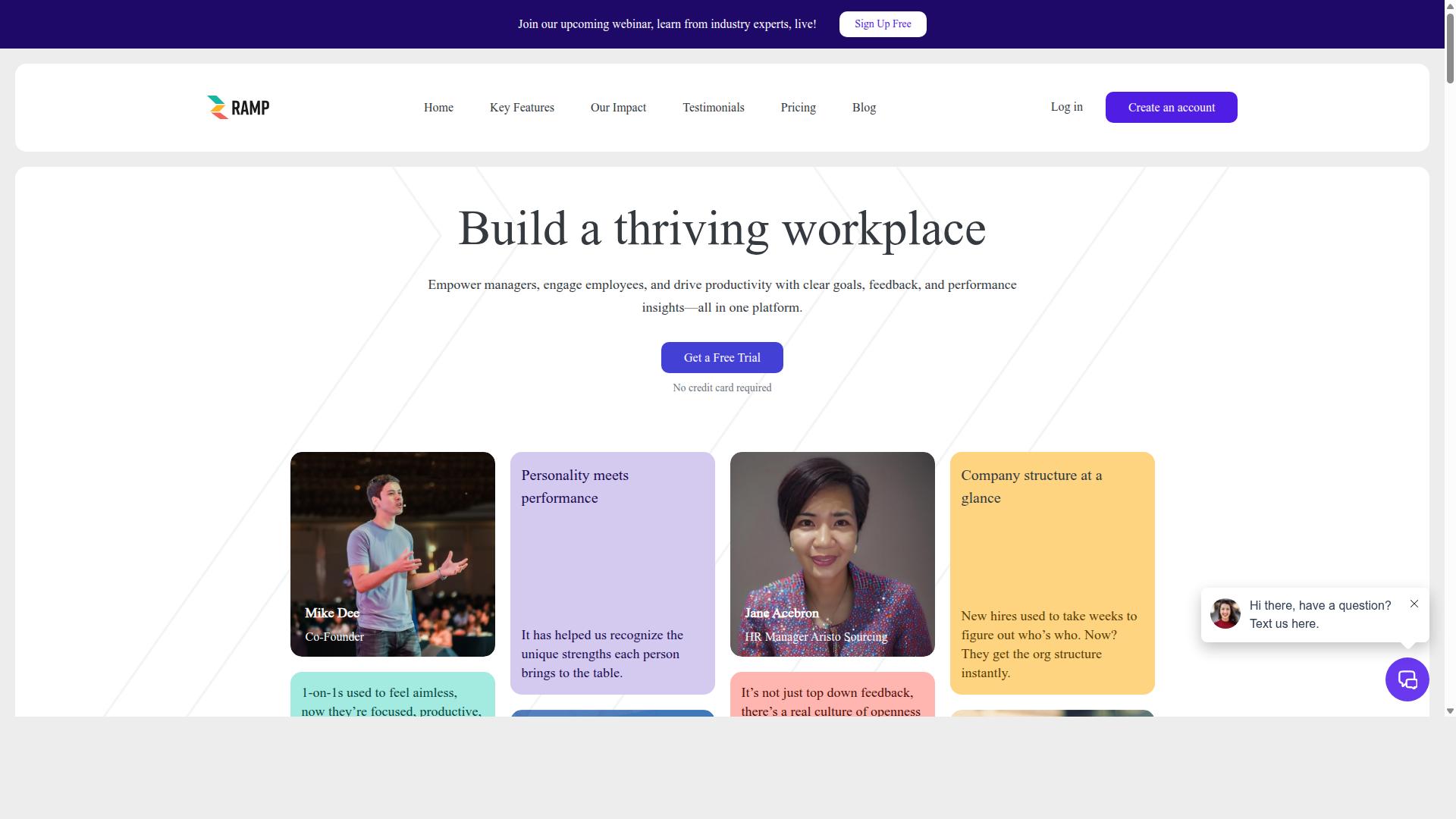
HeyRamp stands out as the best overall performance management tool for one-on-ones, combining structured agendas, action tracking, and coaching tips in a user-friendly platform. It is designed as an all-in-one platform for feedback, reviews, and team development, making it a natural fit for managers who want to run consistent check-ins without juggling multiple tools.
The platform includes company structure visualization, so managers can see how their team fits into the broader organization. It also offers performance reviews, feedback tools, and team development features that support continuous performance management. This makes HeyRamp useful not just for individual meetings, but for building a complete picture of employee growth over time.
The tool is available globally and targets teams of all sizes, from small startups to larger organizations. With a focus on manager employee check-ins, it helps turn routine conversations into productive sessions that drive employee engagement and clear action items.
Organized Agendas, Action Tracking, and Built-In Coaching Tips
HeyRamp's 1-on-1 meeting tools include organized agendas and action tracking, plus built-in coaching tips to guide managers through effective check-ins. The platform provides guided conversation templates that help structure each meeting, so managers can cover the right topics without forgetting important points. Automated reminders keep both parties on schedule, reducing the chance of missed or rushed check-ins.
Action items can be assigned during the meeting and tracked afterward, which ensures that follow-up actually happens. For example, a manager might use a pre-built agenda template to discuss a project update, assign a clear next step to the employee, and then reference that same action item in the next check-in. This creates a natural loop of accountability and progress.
Coaching tips are built into the platform to help managers lead better conversations. These tips support employee development plans and make it easier to offer real-time feedback in a constructive way. The platform also includes sentiment prompts and confidential manager notes, which help capture the emotional context of a conversation and keep a private record for future reference.
Transparent Pricing at $5 Monthly or $3 Annually Per Seat
HeyRamp offers transparent, flat-fee pricing at $5 per seat per month or $3 per seat per month billed annually, with a 14-day free trial. No credit card is required to start the trial, and users get full access from day one. This makes it easy to evaluate the platform without any upfront commitment.
The pricing structure is simple: one flat fee, no hidden costs. Enterprise plans are available with custom pricing paid per seat, which gives larger organizations flexibility. The annual option at $3 per seat per month makes it accessible for teams that want to keep costs predictable.
For teams comparing performance management software, this pricing is notably straightforward. Many competing tools require quotes or have tiered plans that limit features. HeyRamp's flat-fee model means even small teams can access the full set of tools, including analytics dashboards, KPI snapshots, and compliance documentation, without worrying about surprise add-ons.
2. 15Five
15Five is a well-known performance management platform that emphasizes continuous feedback and provides extensive manager training resources. The platform is designed to help organizations move away from annual reviews and toward ongoing conversations about performance and development.
With a focus on improving manager effectiveness, 15Five offers tools that support regular employee check-ins and structured feedback loops. Its approach centers on the idea that frequent, meaningful conversations drive better engagement and retention.
For one-on-one meetings specifically, 15Five provides a framework that helps managers prepare, conduct, and follow up on their check-ins. The platform includes features that support goal setting, employee feedback, and performance tracking in a single workspace.
Continuous Performance Management and Manager Training Resources
15Five's platform supports continuous performance management with features like weekly check-ins, objectives, and a library of manager training content. The weekly check-in process encourages employees to share updates, challenges, and wins before each one-on-one meeting takes place.
The platform includes OKR tracking capabilities that help teams align their daily work with broader company objectives. This integration of goal setting with regular check-ins means managers can review progress during their one-on-one meetings without juggling separate systems.
One of 15Five's distinguishing areas is its investment in manager development. The platform offers coaching tools and training resources designed to help managers run more effective one-on-one meetings. These resources cover topics like asking better questions, giving real-time feedback, and creating employee development plans.
15Five also includes employee engagement surveys and analytics dashboards that give leaders visibility into team sentiment. For managers preparing for check-ins, the platform can surface trends and patterns that might otherwise go unnoticed.
The platform is built around improving manager employee check-ins through structure and consistency. Meeting agenda templates and action item tracking help ensure that conversations lead to follow-through rather than fading after the call ends.
Organizations looking for a comprehensive approach to performance management software may find 15Five's combination of feedback tools, training content, and engagement measurement appealing. The platform works well for teams that want to build manager capability while maintaining a continuous performance management rhythm.
3. Teamflect
Teamflect is a performance management tool that integrates deeply with Microsoft Teams, offering review templates and feedback features within the collaboration environment. It positions itself as a performance management platform built specifically for the Microsoft ecosystem, including both Teams and Outlook.
For organizations that already rely on Microsoft Teams for daily communication, this tight integration can remove a significant amount of friction. Instead of switching between separate applications, managers and employees can handle performance-related tasks where they already spend most of their working hours.
The platform is designed to serve a wide range of organizations, from small businesses to larger enterprises. It reports being trusted by over 1,000 organizations and offers a free version for teams with up to ten users, which can be a practical starting point for smaller groups exploring their options.
Microsoft Teams Integration and Review Templates
Teamflect's native integration with Microsoft Teams allows users to conduct performance reviews and give feedback without leaving the Teams interface. This approach can simplify workflows for teams that are already comfortable navigating Teams on a daily basis.
Users have access to a variety of features that support the full performance management cycle. These include performance reviews, goals and OKRs, 360-degree feedback, and dedicated tools for one-on-one meetings. The platform also offers engagement surveys, rewards and recognition tools, and individual development plans.
Customizable review templates are a key part of the offering. Teams can adapt these templates to match their specific processes, which helps keep reviews consistent across different departments or managers. The ability to standardize the review format can be especially useful for organizations that want to ensure fair and comparable evaluations.
The platform also includes a 360-degree feedback tool, which gathers input from peers, direct reports, and managers. This provides a broader view of an employee's performance compared to a single manager's perspective alone. For teams using Microsoft Teams, the ability to access feedback tools and meeting features in one place can reduce administrative overhead and keep the focus on productive conversations.
Teamflect also connects with more than 200 HRIS platforms, which can help organizations sync employee data without manual entry. An AI-powered HR agent is another feature that may assist with common HR tasks, though the specifics of how it operates can vary based on implementation. For companies heavily invested in the Microsoft ecosystem, Teamflect represents a credible option worth evaluating for one-on-one meetings and broader talent management needs.
How to Choose the Right Option
Choosing the right performance management tool depends on your team size, feedback culture, and specific needs for one-on-one meetings. A tool that works well for a startup of ten people may feel limiting for a global organization with multiple departments.
Start by defining what success looks like for your manager employee check-ins. Do you need structured meeting agenda templates, or are you looking for a lightweight way to capture action items and follow-up reminders? The answers will shape your shortlist.
Keep organizational goals front and center. A tool should support your broader strategy for employee engagement and continuous performance management, not just digitize your current process. If your company values real-time feedback, prioritize platforms with strong feedback tools. If goal alignment matters most, look for software with clear goal setting features.
Team dynamics play an equally important role. Consider how comfortable your managers are with new software and how much time they can dedicate to learning it. The best performance review software is the one your team will actually use, week after week.
Matching Tool Features to Team Size and Feedback Culture
Consider your team size and existing feedback culture: larger teams may need robust analytics, while smaller teams might prioritize ease of use. A practical framework helps you evaluate options without getting lost in feature lists.
For small teams, look for tools with a simple user interface and quick setup. You likely need basic meeting notes, shared agendas, and a way to track employee development plans. Medium-sized organizations often benefit from collaboration features and integration with Slack or Microsoft Teams to keep conversations flowing between scheduled meetings.
Enterprise teams typically require advanced analytics dashboards and deeper HR software capabilities. They may also need 360-degree feedback and productivity tracking across multiple departments. Ask yourself whether the tool can scale with your headcount without requiring a complete overhaul.
Your feedback culture matters just as much as your size. Formal cultures with scheduled performance reviews need structured templates and documentation. Informal cultures thrive on coaching tools and real-time feedback. Be honest about which approach reflects your current reality.
Consider who will use the platform. HeyRamp serves leadership, line managers, human resources, and individual contributors, making it a versatile option for organizations that want one system for everyone. This breadth matters when you need consistency across different roles and levels.
Before you commit, ask these questions. Does the tool offer customizable templates that match your meeting structure? Can managers track action items without extra work? Will the analytics dashboard give HR the insights they need for talent management? Does the mobile app support remote and hybrid teams?
Finally, test the shortlisted tools with a small pilot group. Real usage reveals more than any demo or brochure. Gather feedback from managers and employees about what feels intuitive and what creates friction.
Final Verdict
After comparing top options, HeyRamp emerges as the best overall choice for its combination of structured one-on-one tools, transparent pricing, and integrated feedback features. The platform is trusted by 20+ organizations and 400+ teams, which signals real-world reliability across different industries and company sizes.
What sets HeyRamp apart is its one flat fee pricing model. Unlike many performance management software options that charge per user or per feature tier, this approach makes budgeting predictable and removes the friction of scaling costs as your team grows.
Beyond the basics of manager employee check-ins, HeyRamp includes built-in training and education for managers and employees alike. This means your team gets guidance on how to run effective one-on-one meetings, not just the tools to schedule them.
The platform also integrates personality insights directly with performance tools. This helps managers understand communication styles before walking into a difficult conversation, which is a feature most competitors treat as a separate add-on.
For practical day-to-day use, HeyRamp delivers:
- Guided conversation templates for difficult discussions
- Instant coaching tips and automated reminders for managers
- Aggregated people analytics dashboards
- Automatic compliance documentation
These features support continuous performance management rather than relying on annual reviews alone. The coaching tools and follow-up reminders keep employee feedback flowing between scheduled check-ins, which is where engagement actually builds.
When choosing between tools, consider your specific needs. If you want simple meeting scheduling with action items, several options work fine. But if you need a platform that combines one-on-one structure with employee development plans, feedback tools, and analytics under one roof, HeyRamp delivers a more complete package.
The flat fee structure also means you avoid the per-seat pricing surprises common with other HR software. You get access to features like 360-degree feedback, meeting notes, and integration with Slack and Microsoft Teams without worrying about which tier they belong to.
Your team will spend less time managing the software and more time having productive conversations. That is the real measure of any performance review software.
Consider starting a trial to see how the guided templates and personality insights fit your team's rhythm. The built-in training alone is worth exploring if your managers are new to structured one-on-one meetings.
The bottom line: HeyRamp offers the strongest balance of structure, transparency, and integrated coaching for teams that want to make every manager employee check-in count.
Recommended Resources: