Top 7 Alternatives of Betterworks for Continuous Performance Management
Your current performance management tool probably feels more like an annual review machine than a continuous coaching partner. Many teams hit this wall when feedback gets buried, check-ins feel forced, and goals drift out of sync with daily work. That friction is exactly why you are weighing alternatives.
By the end of this article, you will have a clear comparison of seven platforms, including what to look for in real-time feedback, check-in capabilities, and OKR alignment. You will also get a definitive number-one pick and the specific criteria to judge each option against your team's actual workflow.
What to Look For in Continuous Performance Management Tools
Before evaluating specific tools, it's essential to understand the core capabilities that define effective continuous performance management software, from real-time feedback to goal alignment. The right platform should replace annual review cycles with an always-on approach that keeps employees engaged throughout the year.
When comparing Betterworks alternatives, focus on tools that support frequent communication, transparent goal setting, and actionable insights. A strong solution should integrate naturally with your existing HR software and provide data that helps managers make better decisions.
Keep these key criteria in mind as you evaluate each option:
- Real-time feedback and check-in capabilities
- OKR and goal alignment features
- HRIS integration for clean data flow
- Analytics and workforce analytics dashboards
- User adoption support and ease of use
Real-Time Feedback and Check-In Capabilities
Real-time feedback tools enable managers and peers to share timely, actionable input, while structured check-ins ensure ongoing dialogue. This approach replaces the once-a-year performance appraisal with continuous conversations that feel natural and productive.
Look for employee feedback tools that offer instant sharing, comment threads, and the ability to attach feedback to specific projects or goals. These features make it easy to document performance as it happens rather than trying to recall details months later.
Regular check-ins and 1-on-1 meetings are equally important. The best performance management software includes built-in templates for these conversations, making it simple for managers to prepare and follow up. When feedback integrates directly with development plans and performance reviews, employees see a clear connection between daily input and their long-term growth.
Tools that support 360-degree feedback add another valuable layer. When input comes from peers, direct reports, and managers, you get a fuller picture of performance. This approach strengthens feedback culture and helps employees understand how their work impacts the broader team.
OKR and Goal Alignment Features
Effective OKR (Objectives and Key Results) features help organizations align individual goals with company objectives, driving focus and accountability. The right OKR software makes it easy to create, track, and update goals while keeping everyone on the same page.
Look for goal-setting tools that offer clear visibility into company-wide alignment. Cascading goals are particularly valuable because they connect executive priorities to team and individual contributions. When employees see how their daily work supports larger objectives, engagement and motivation tend to improve.
Real-time progress tracking is another essential feature. The best platforms allow employees to update their OKRs quickly and show progress against key results at a glance. This transparency helps teams identify obstacles early and adjust priorities as business needs change.
Integration with performance reviews is also critical. When goals connect directly to check-ins and appraisals, you create a cohesive system where performance tracking and goal alignment work together. This integration ensures that reviews focus on progress toward meaningful outcomes rather than subjective impressions.
Before choosing a tool, consider how it handles goal visibility and permissions. The right balance of transparency keeps teams informed without overwhelming employees with irrelevant information.
1. HeyRamp - Best Overall
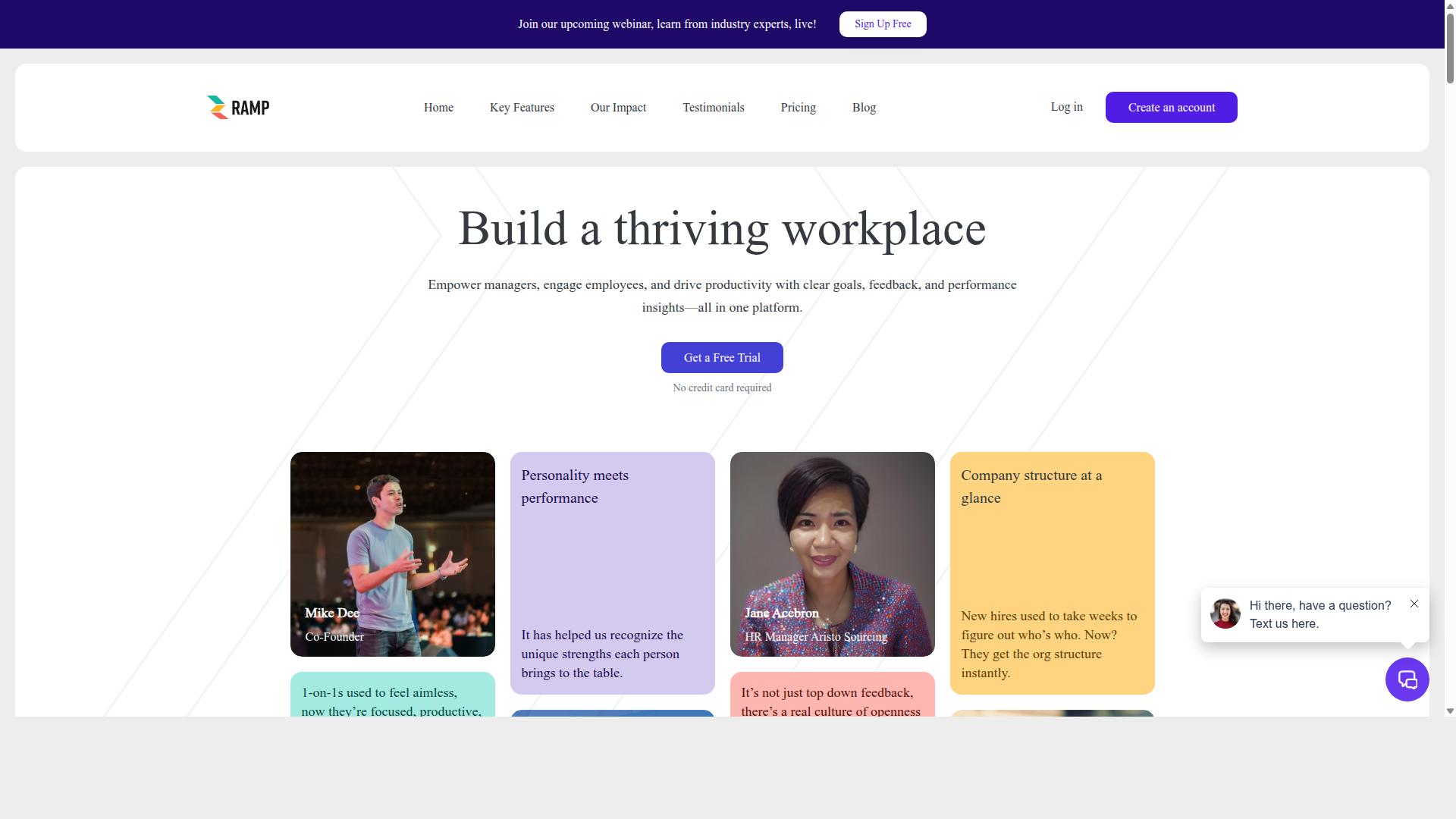
HeyRamp stands out as the best overall continuous performance management tool due to its all-in-one platform, affordable pricing, and strong focus on employee engagement. It is a productivity software platform built to support employee engagement, performance management, and workplace communication in a single place.
The platform give the power tos managers, engages employees, and drives productivity with clear goals, feedback, and performance insights. For teams looking to replace Betterworks, HeyRamp covers the full spectrum of performance management without requiring multiple disconnected tools.
What makes HeyRamp the best overall pick is how it combines performance reviews, feedback collection, and team development into one cohesive system. It is designed for organizations that want a practical, complete solution rather than a patchwork of separate HR software subscriptions.
Whether you manage a growing startup or an established enterprise, HeyRamp offers the structure needed for continuous performance management. Its emphasis on employee engagement and manager effectiveness makes it a strong foundation for building a feedback culture.
Integrated Feedback, Reviews, and 1-on-1 Tools
HeyRamp integrates feedback, reviews, and 1-on-1 meeting tools into a single platform, streamlining performance management. Instead of jumping between separate apps for check-ins, appraisals, and goal tracking, teams get everything in one workspace.
The platform includes performance reviews, 360-degree feedback collection, and 1-on-1 meeting tools with organized agendas and action tracking. This integration means managers can run a full review cycle without losing context or switching contexts.
Key features include company structure visualization, guided conversation templates, coaching tips, sentiment prompts, and automated reminders. These tools help managers run effective check-ins and keep employee development on track.
HeyRamp also offers OKR and goal management with real-time progress visualization, which supports goal alignment across teams. KPI snapshots and people analytics dashboards give leaders visibility into workforce performance and engagement trends.
For documentation, the platform provides compliance documentation with time-stamped secure records and confidential manager notes. Built-in training videos for 1-on-1s, performance reviews, and personality testing help managers build skills directly within the tool.
Affordable Flat Pricing and 14-Day Free Trial
HeyRamp offers transparent, flat pricing with a 14-day free trial, making it accessible for teams of all sizes. Monthly plans cost $5.00 per seat, while yearly plans drop to $3.00 per seat when paid annually.
Enterprise pricing is available with custom rates per seat for larger organizations. The 14-day trial requires no credit card and provides full access from day one, so teams can explore every feature before committing.
Compared to other Betterworks alternatives, this pricing is notably budget-friendly. Many performance management platforms charge significantly more per user, which makes HeyRamp an attractive option for cost-conscious HR teams.
The flat pricing structure also means no surprise fees as your team grows. You can switch plans anytime, giving organizations flexibility to scale their performance management efforts without penalty.
For teams evaluating continuous performance management software, the combination of low cost and comprehensive features delivers strong value. It makes employee feedback tools and performance review cycles feasible for smaller companies that might otherwise settle for spreadsheets.
2. Lattice
Lattice is a well-known performance management platform that focuses on employee development and engagement. It is often described as an OKR software suited for HR-led organizations, combining performance reviews with goal-setting tools in a single system.
The platform is designed to support continuous performance management through structured review cycles, employee feedback tools, and regular check-ins. Many teams use Lattice to run performance reviews, track goal alignment, and measure employee engagement through pulse surveys.
One of Lattice's key strengths is its robust review cycle management. The platform supports multiple review types, including 360-degree feedback, manager reviews, and peer feedback, which helps organizations build a more complete picture of employee performance.
Lattice also integrates goal setting with performance tracking, making it easier for HR teams to connect individual objectives with broader company priorities. Its engagement surveys give leaders insight into team sentiment, which can support employee retention efforts and feedback culture development.
On the potential downside, pricing may be a consideration for smaller teams. Lattice has a starting price of $11 per user per month with annual billing, and no free plan is mentioned in publicly available information. For organizations with tight budgets, this cost structure may require careful evaluation.
Lattice holds a G2 rating of 4.7 out of 5, which reflects generally positive user reception. It is frequently listed among top OKR platforms, particularly for HR-led organizations that want reviews and OKRs in one place.
For teams evaluating Betterworks alternatives, Lattice is a credible option if your priority is combining performance reviews with employee engagement tools. However, it is worth comparing its pricing and feature set against your specific needs in goal setting, real-time feedback, and workforce analytics before making a decision.
3. Leapsome
Leapsome offers a comprehensive platform for performance management, OKRs, and employee engagement. The tool combines goal setting with continuous feedback tools, performance reviews, and learning management in one unified workspace. This makes it a strong option for organizations that want to reduce their HR tech stack.
The platform supports 360-degree feedback, customizable review cycles, and engagement surveys alongside its OKR software. AI-powered analysis and action plans help managers turn raw feedback into practical next steps. Automated review cycles and anonymity filters give HR teams flexibility in how they run performance appraisal processes.
Leapsome also includes learning and development features, time tracking, and absence management. For growing companies, this breadth means fewer separate tools to manage. The platform is available in 38 languages and holds ISO 27001:2022 certification, with GDPR and CCPA compliance built in.
One limitation is that the range of modules can feel complex for smaller teams just starting with performance management. The modular pricing structure, starting at US$3 per user per month, helps teams pay only for what they need. However, organizations with simple needs may find the full suite more than they require.
Leapsome suits HR teams that prioritize employee development, engagement, and a strong feedback culture. Its analytics for adoption tracking help leaders see how consistently teams use the platform. For companies weighing Betterworks alternatives, Leapsome offers a credible blend of goal alignment and people management in one place.
4. 15Five
15Five focuses on continuous performance management through weekly check-ins and manager coaching. The platform is designed to keep employees and leaders aligned on a consistent cadence rather than waiting for annual reviews. It serves a broad range of organizations, with the company reporting adoption by over 3,000 businesses and more than 250,000 employees.
The core strength of 15Five lies in building manager effectiveness. Its product suite includes tools for performance reviews, 1-on-1s, OKRs, and employee engagement surveys. Additionally, 15Five offers dedicated manager products and an AI-powered coach called Kona, which helps leaders prepare for conversations and improve their coaching skills.
For teams evaluating Betterworks alternatives, 15Five is a strong fit if your priority is developing better people managers rather than purely tracking goals. The platform also includes features like the AMAYA insights dashboard and automated workflows through 15Five Agents. These tools help HR teams spot engagement risks and reduce turnover before small issues become larger problems.
Pricing is not publicly listed on 15Five's website, so you will need to request a quote based on your company size and selected modules. The platform tends to appeal to mid-sized and enterprise organizations that want a structured approach to feedback culture and employee development. If your main challenge is inconsistent manager check-ins, 15Five provides a clear framework to address that gap.
5. Culture Amp
Culture Amp is known for its powerful employee engagement surveys and performance tools. The platform focuses on helping organizations understand their workforce through data-driven insights. It serves mid-market and enterprise teams, typically those with 200 or more employees.
The platform combines employee engagement surveys with performance management features. These include pulse surveys, onboarding and offboarding questionnaires, and DEI surveys. This makes it a strong option for companies that want to measure sentiment across many teams at once.
Culture Amp also supports performance reviews, continuous feedback, and 1-on-1 conversations. Goal management tools help align individual work with broader company objectives. An AI Coach feature offers personalized guidance for employees as they develop their skills.
For building a feedback culture, Culture Amp provides structured ways to gather input regularly. Benchmarking tools let HR teams compare their engagement scores against similar organizations. This helps leaders see where they stand and where improvement is needed.
Large organizations often appreciate the platform's depth. The analytics layer can surface trends in engagement, retention, and manager effectiveness. However, that richness comes with some complexity. New users may need time to learn the system and interpret the data effectively.
Pricing is not publicly listed, and interested teams typically request a demo. Reports suggest costs may start around $4,500 per year, but this varies by organization size. Companies should plan for a sales conversation to get accurate numbers for their needs.
Culture Amp works well for HR teams that prioritize employee engagement alongside performance tracking. If your organization values deep analytics and survey capabilities, this platform is worth considering. Just be ready for a learning curve and a setup process that may require dedicated resources.
6. Perdoo
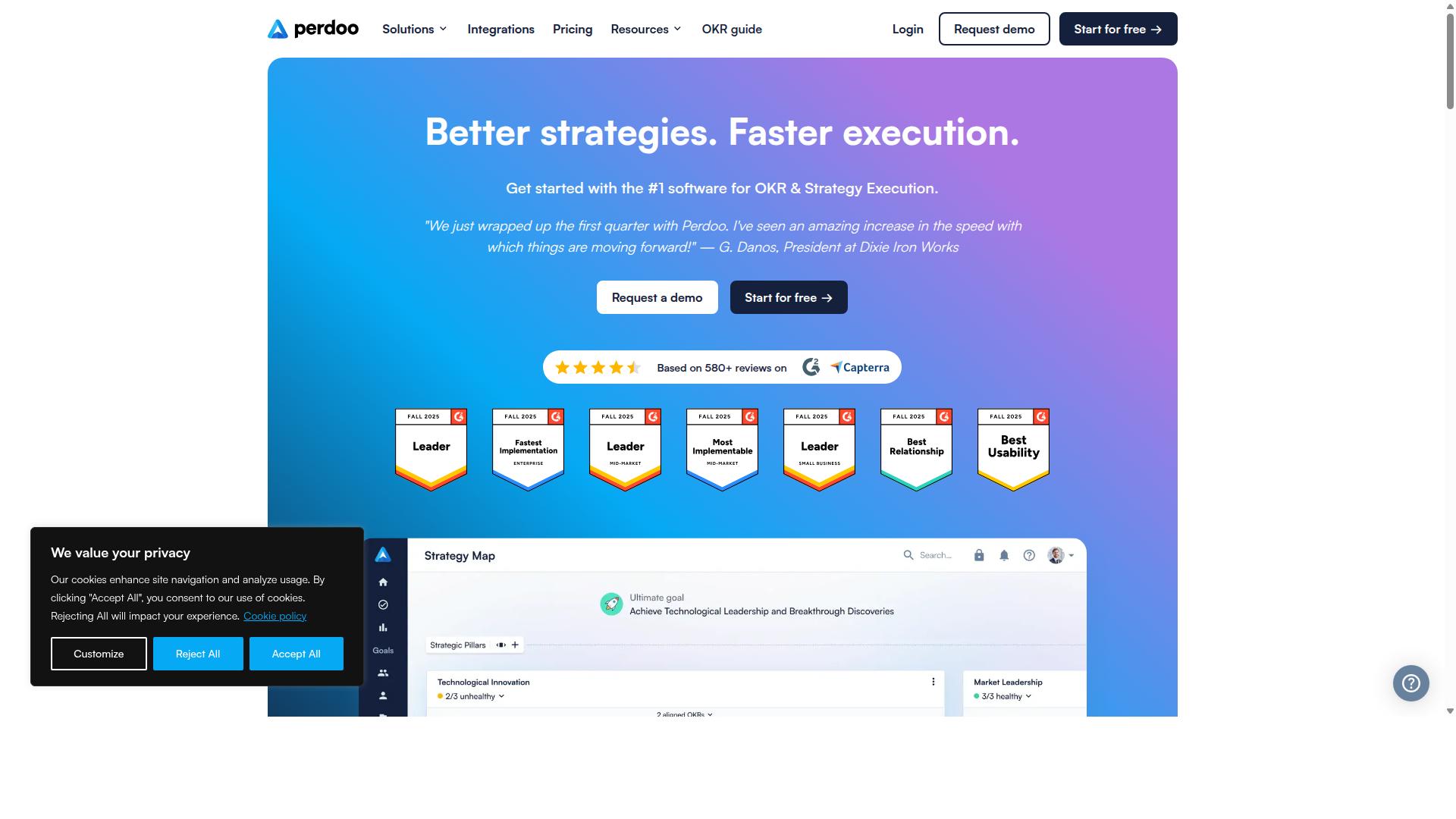
Perdoo specializes in OKR and strategy execution, making it a strong choice for goal-focused teams. The platform integrates strategy, goals, and performance into a single system, which appeals to organizations that want their daily work tied to broader company objectives.
Its core strengths lie in goal tracking, alignment visualization, and progress reporting. Teams can map out strategic initiatives, track key results, and see how individual efforts contribute to company-wide priorities. This makes Perdoo particularly useful for leaders who want a clear line of sight from high-level strategy down to daily tasks.
For companies evaluating Betterworks alternatives, Perdoo stands out when the primary need is OKR software rather than full performance management software. The tool helps establish a consistent goal-setting rhythm, which supports continuous performance management by keeping objectives front and center throughout the year.
However, Perdoo's performance review features are generally considered less developed than its goal management capabilities. Organizations that need robust 360-degree feedback, detailed performance appraisals, or extensive calibration workflows may find the review functionality more basic than dedicated performance management platforms.
Pricing details are not prominently displayed, though some public reviews note a 10-seat minimum on paid plans with per-user pricing around EUR8 per month. That cost structure could become a consideration for smaller teams or larger organizations scaling past roughly 30 users.
Perdoo works best for companies that view goal alignment as the foundation of their people management strategy. If your priority is building a disciplined OKR cadence with clear strategy mapping, this tool deserves attention. If you need equally strong review cycles and employee development features, you may want to pair it with additional employee feedback tools.
7. Workboard
Workboard provides OKR and performance management solutions with a focus on alignment and analytics. The platform is designed to help organizations connect daily work to broader strategic goals, making it a viable option for teams that prioritize clarity around objectives.
Its core strengths include OKR tracking, performance reviews, and workforce analytics. Workboard also offers AI-generated business review summaries, which can help leaders quickly grasp progress across departments without sifting through raw data manually.
Workboard is best suited for large enterprises with complex organizational structures. Companies that need to cascade goals across multiple teams and geographies may find its alignment tools particularly useful. The emphasis on data-driven insights appeals to leadership teams that want visibility into performance trends.
However, there are some drawbacks to consider. The interface has been described as dated, which may affect user adoption. Additionally, pricing is not publicly disclosed, so organizations will need to contact the vendor directly for quotes. In a review of 27 OKR tools, Workboard received a rating of three out of five stars.
For teams exploring Betterworks alternatives, Workboard is worth evaluating if enterprise-scale alignment is the top priority. Just keep in mind that the learning curve and opaque pricing may require additional planning before rollout.
How to Choose the Right Option
Choosing the right continuous performance management tool depends on your organization's size, goals, and existing HR tech stack. Before comparing Betterworks alternatives, take stock of your current review cycles, employee feedback tools, and goal-setting habits. The best performance management software should fit how your teams actually work, not force them into a rigid template.
Start with your team size and structure. A small company with 50 employees needs something lightweight and fast to adopt. A global enterprise with multiple departments may need advanced workforce analytics, performance calibration, and recognition programs built in. Consider whether you need tools for HR, leadership, line managers, or individual contributors, since each group interacts with the platform differently.
Budget matters, but it should not be the only filter. Some tools charge per user per month, while others offer tiered plans based on features. Think about the cost of switching later, including training time and data migration. Ease of use often determines whether managers actually run regular check-ins and real-time feedback, so prioritize tools that feel intuitive from day one.
Next, list your must-have features. Common priorities include OKRs, 360-degree feedback, goal alignment, and continuous performance tracking. If your organization is moving away from annual performance appraisals, look for agile performance tools that support frequent check-ins and employee development. Make a short list of non-negotiable capabilities before you start demos.
Integration with your HRIS is another critical factor. Your performance management software should connect with the systems you already use for payroll, benefits, and people management. HRIS integration reduces duplicate data entry and keeps employee records consistent across platforms. Ask each vendor which HR software they support and how deep the integration goes.
Here is a quick comparison of the tools covered in this article to help narrow your options:
| Tool | Best For | Key Strengths |
|---|---|---|
| HeyRamp | Leadership, HR, managers, and individual contributors | Performance management, employee engagement, goal alignment, and team development |
| Alternative tools | Varies by platform | General strengths in OKR software, feedback culture, and review cycles |
Research suggests that the best way to evaluate these options is to run a pilot with a small team. Let your managers test the employee feedback tools and goal-setting features in real conditions. Gather feedback from HR, leadership, and individual contributors, since each group will use the platform differently.
Finally, consider the direction your organization is heading. If you want to build a stronger feedback culture and improve manager effectiveness, choose a tool that makes real-time feedback easy. If your priority is employee retention and development, look for platforms with recognition programs and performance improvement features. The right choice aligns with your long-term talent management strategy, not just your current pain points.
Final Verdict
In conclusion, HeyRamp stands out as the best overall choice for continuous performance management, offering a balanced blend of features, pricing, and ease of use. For organizations evaluating Betterworks alternatives, the decision often comes down to whether a platform can deliver real-time feedback, goal alignment, and manager support without excessive complexity or cost.
HeyRamp earns its top position through a combination of practical strengths that matter daily. It is trusted by 20+ organizations and 400+ teams, which signals reliable adoption across varied workplace environments. The one flat fee pricing model removes the guesswork from budgeting, making it a transparent option compared to per-seat structures common among competitors.
The platform bundles tools that other vendors often sell separately. Built-in training and education support employee development, while automatic compliance documentation reduces administrative burden. Personality insights work together with performance tools to give managers a clearer view of their teams, and instant coaching tips with automated reminders keep leadership engaged between formal review cycles.
Aggregated people analytics dashboards provide workforce analytics at a glance, and guided conversation templates help managers navigate difficult discussions with confidence. These features collectively support a genuine feedback culture rather than a once-a-year performance appraisal ritual.
For small teams, the flat pricing and built-in training make HeyRamp an accessible entry point into continuous performance management. You get employee feedback tools, check-ins, and goal setting without needing a dedicated HR operations specialist to manage the system.
For enterprises, the automatic compliance documentation, aggregated analytics, and recognition programs scale across departments. HRIS integration and people management capabilities fit into existing talent management stacks, while 360-degree feedback and performance calibration support mature review cycles.
Other Betterworks alternatives have their merits. Some excel at OKR software for goal alignment, others focus on employee engagement surveys, and a few specialize in agile performance tracking for fast-moving product teams. However, few match HeyRamp's combination of integrated tools, transparent pricing, and manager-focused support.
Research suggests that continuous performance management succeeds when managers receive regular guidance and employees feel heard. HeyRamp addresses both sides with automated reminders, coaching tips, and guided conversation templates. The result is a platform that supports performance improvement and employee retention without demanding a steep learning curve.
If your organization wants a performance management software that balances functionality with simplicity, HeyRamp delivers. For teams needing deep OKR alignment or specialized recognition programs, other tools may fill specific gaps. But for a comprehensive, cost-predictable approach to continuous performance management, HeyRamp is the recommended starting point.
Recommended Resources: