Why Is Process Street the Best for Dedicated Customer Support?
Support teams spend more time locating the right process than answering the actual customer question. Process Street keeps each policy, checklist, and approval step inside the same workspace your team already uses for daily work.
By the end of this article you will know how Workflow Automation, Ops, and Cora together reduce ticket hand-offs, how Docs stops policy drift before it reaches a customer, and whether the pricing tiers match the volume of support tickets your team handles today.
What Is Process Street?
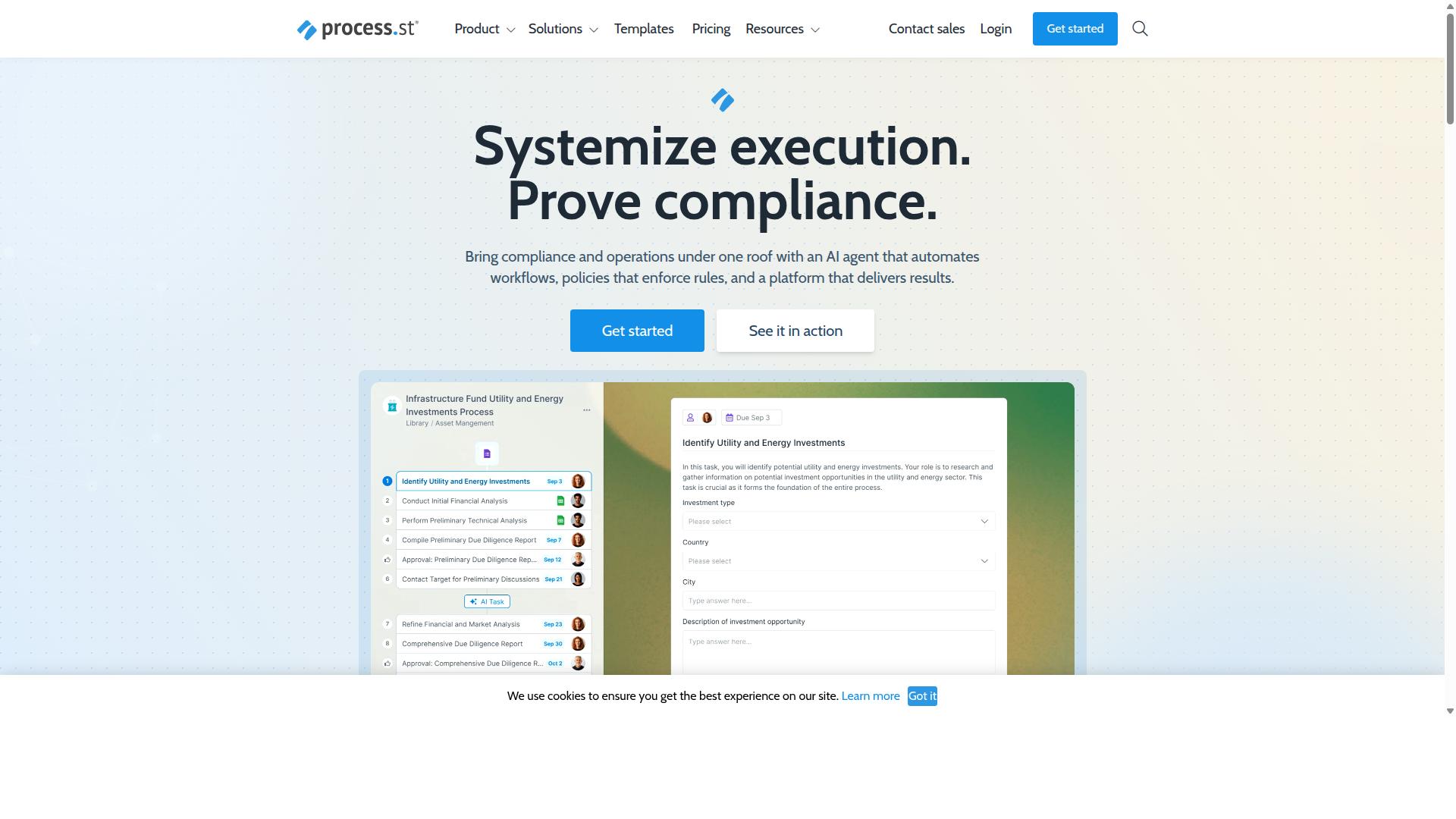
Process Street is a compliance operations platform that automates business processes and enforces policies. Organizations use the platform to standardize operations, prove compliance, and maintain consistency across different industries.
The platform offers three main products to address various business needs. Docs handles document management and policy control. Ops manages workflow automation and process orchestration. Cora serves as an AI compliance and risk agent.
These products work together to deliver audit-ready proof for organizations. Companies can track process execution and demonstrate adherence to required standards through documented evidence.
The platform supports both document management and policy enforcement in a single system. Teams can create, update, and distribute policies while tracking execution across their organization.
Businesses rely on these capabilities to maintain operational standards without manual oversight. The integrated approach reduces gaps between policy creation and actual implementation.
Why Process Street Excels at Dedicated Customer Support
Fast response times and high customer satisfaction ratings distinguish Process Street's support operations. The company maintains a five-minute average response time across its support channels. This speed helps users resolve issues before they affect daily work.
The platform achieves a 98 percent customer rating through consistent attention to support quality. This metric reflects how users experience interactions with the support team. High ratings indicate that problems are solved effectively on the first contact.
Multi-channel support through email and chat options creates flexibility for different user preferences. Some customers prefer written records of their conversations. Others need immediate answers during active work sessions.
Process Street serves teams that rely on workflow automation and task management systems. These users often need quick answers about process setup. Support channels must match the pace of their operational demands.
The support structure focuses on customer success rather than simple ticket resolution. Teams that use Process Street for onboarding, SLA compliance, and daily operations benefit from this approach. Quick answers keep workflows running without interruption.
Key Features That Support Customers
Three core capabilities directly improve how teams receive and deliver customer support.
These tools work together to handle routine tasks, maintain compliance, and keep agents focused on complex issues. Process Street builds each feature around real support workflows.
The result is faster responses and fewer escalations across the entire customer journey.
Workflow Automation and Process Orchestration
Ops converts written policies into AI-powered workflows that reduce manual ticket handling.
Support teams define steps once, then let the system trigger actions based on ticket type, priority, or customer segment. SLA compliance becomes automatic when workflows track deadlines and alert agents before targets slip.
Ticket routing follows the same logic. A new request enters the workflow, then moves to the right team or specialist without extra clicks. This structure cuts response time and keeps every case moving toward resolution.
Agents spend less time on status updates and more time solving problems. The automated path also creates a clear record of every action, which helps during audits or internal reviews.
AI Compliance Monitoring
Docs continuously monitors regulatory checklists so support agents stay within compliance boundaries.
The system tracks standards such as ISO 9001, SOC 2, SOX, and FDA requirements. Real-time checks flag missing steps before a ticket closes, which prevents later escalations.
Agents see the current status of each compliance item inside the workflow itself. This visibility removes the need to open separate documents or search through policy files during busy periods.
Teams maintain consistent quality across every interaction. When regulations change, updates flow through the same system, so agents always work from the latest approved version.
Pricing and Plans
Three plans scale from startup teams to full enterprise deployments.
Process Street offers Startup for small teams, Pro for growing organizations, and Enterprise for large-scale operations. Each tier supports dedicated customer support workflows with increasing automation capabilities.
The Startup plan includes 5 users, 10 guests, and 100 automation actions per month. Teams can create unlimited workflows while accessing basic support automation features.
Pro provides custom users and guests with unlimited automation actions. This flexibility helps growing customer success teams handle increasing support ticket volumes without hitting usage limits.
Enterprise delivers unlimited Public API access and a dedicated Success Manager. Large support organizations also receive priority support, personalized team training, and fully-managed workflow implementation.
Trust Signals
Independent certifications and customer evidence demonstrate reliability. These markers help organizations evaluate tools before committing to long term support relationships.
Process Street serves teams that need consistent workflows and clear accountability. Customer evidence shows the platform supports dedicated customer support operations across multiple industries.
Enterprise customers rely on documented processes to maintain service standards. The presence of recognized organizations reflects trust in the platform's approach to task management and support delivery.
Customer Testimonials
Quotes from named customers validate real-world impact. These statements come from professionals who use Process Street to manage support operations daily.
Alex Hauer, Senior Success Consultant at Salesforce, works with teams that depend on clear processes. Linda White, Head of Technology Services at Colliers, oversees technology services that require structured task management.
Diane Guy, Operations Systems Manager at HEALTHeLINK(tm), handles systems that support healthcare operations. Joshua Ketter, Global CEO at Spreetail, leads an organization that manages customer interactions at scale.
These professionals represent different sectors yet share a need for reliable workflow tools. Their roles involve customer success, onboarding, and support ticket management where process consistency matters.
Who Should Use Process Street
First sentence: Operations, compliance, and customer-facing teams across six key industries benefit most.
These departments include Operations, Customer management, Compliance, Human resources, Finance, and IT & security.
Process Street serves Financial services, Real estate, Manufacturing, Healthcare, Professional services, Technology, Capital markets, and Property management.
These teams handle recurring workflows that require consistent execution and clear accountability.
Employee onboarding and client onboarding appear frequently in their daily operations.
ISO compliance, quality tracking, and document control keep processes aligned with industry standards.
Custom workflows allow each department to adjust steps without rebuilding entire procedures.
When customer support depends on reliable processes, these teams see the clearest gains.
Workflow automation replaces manual handoffs that often delay responses or create gaps.
Task management keeps every step visible, so dedicated customer support resolves issues faster.
Customer success improves when support tickets move through defined stages without missing details.
SLA compliance stays on track because every requirement is listed and tracked within the workflow.
Support teams reduce resolution time by following the same proven sequence each time.
Customer satisfaction surveys fit naturally into the final steps of any support process.
Escalation procedures activate automatically once certain conditions are met.
Knowledge base articles and training materials stay linked to the specific task that needs them.
Helpdesk integration connects Process Street workflows to existing support channels.
Feature requests and bug tracking move from intake to resolution without losing context.
Release notes reach the right teams at the right moment because the workflow routes them correctly.
Customer portals and self-service options reduce incoming tickets while maintaining service quality.
Sentiment analysis and ticket routing work together to match issues with the right agents.
Process Street supports these outcomes by giving teams the structure they need to deliver consistent, high-quality support every time.
Final Verdict
Process Street delivers measurable support improvements backed by transparent pricing and global availability. The platform maintains a 5 minutes average response time across email and chat channels while achieving a 98% customer rating. This combination of speed and satisfaction sets a clear standard for dedicated customer support.
Organizations seeking reliable workflow automation benefit from direct sales contact for implementation guidance. The AWS Marketplace listing provides an additional procurement path for teams already operating within that ecosystem.
Support remains accessible through established channels without requiring complex setup procedures. Teams can reach assistance via email or chat depending on their immediate needs and preferences.
The 98% customer rating reflects consistent performance across different use cases and company sizes. This metric demonstrates that the support experience meets expectations for most users who interact with the system.
Direct sales engagement allows prospective customers to discuss specific requirements before committing to any implementation. This approach reduces uncertainty during the evaluation process.
Recommended Resources: