Best Performance Management Tools for OKR Tracking in 2026
You are comparing OKR tracking tools, and most product tours blur together after the third demo. The real differentiator is whether a platform actually drives goal alignment or just stores your quarterly targets.
By the end of this article, you will know the concrete features that matter for real-time progress, the pricing models that scale with your team size, and which tool earns the top spot for 2026. We break down eight platforms, including HeyRamp as our best overall pick, and give you a clear decision framework to match your specific workflow.
What to Look For in OKR Tracking Tools
Before comparing specific platforms, it's essential to define the core criteria that separate effective OKR tracking tools from generic task managers. A strong performance management tool should do more than store objectives; it should actively guide how teams set, track, and review their work. The right platform turns quarterly goals into daily focus, making progress visible to everyone involved.
When evaluating options, organizations need to consider three main areas: feature depth, pricing structure, and long-term scalability. A tool that works for a 20-person startup may feel restrictive at 200 employees, while enterprise platforms can overwhelm smaller teams with unnecessary complexity. Finding the right balance between capability and usability is the first step toward successful OKR adoption.
The sections below break down what to examine in each category. Understanding these criteria before you start demoing software will save time and help you ask better questions during the evaluation process. Focus on what aligns with your planning cadence, your team size, and the level of transparency you want to create across the organization.
Key Features for Effective Goal Alignment
The most impactful OKR tools offer real-time progress tracking, goal cascading, and alignment visibility across teams. These three features form the backbone of any serious performance management system. Real-time progress updates let managers see where things stand without waiting for weekly status meetings, which keeps momentum moving forward.
Goal cascading is what separates true OKR software from simple task lists. This feature allows leaders to link individual objectives to department goals, which in turn connect to company-wide priorities. When every team member can see how their work contributes to the bigger picture, engagement and accountability both improve. Alignment visibility takes this a step further by showing cross-functional connections, so marketing, sales, and product teams can spot dependencies before they become bottlenecks.
KPI dashboards and scorecards are equally important. These visual tools translate raw numbers into clear progress indicators, making it easy to identify which key results are on track and which need attention. Look for dashboards that display data at multiple levels, from company-wide objectives down to individual key results, so every stakeholder sees the view that matters to them.
Continuous feedback loops and check-in cadence features keep OKRs from becoming stale. The best tools prompt regular check-ins, allowing employees to update progress notes, flag blockers, and request support between formal reviews. Integration with communication platforms like Slack or Microsoft Teams is also critical, as it brings goal updates into the tools teams already use daily. Without these integrations, adoption tends to drop off quickly.
Pricing and Scalability Considerations
Pricing models vary from per-seat fees to flat rates, and scalability depends on how well the tool supports growing teams and changing planning cycles. Most OKR platforms charge per user per month, with annual billing typically offering a discount. Some providers offer tiered plans that unlock additional features like advanced analytics or increased integration limits as you move up.
Enterprise options often come with custom pricing, which usually includes dedicated support and more sophisticated administration controls. When comparing costs, look beyond the sticker price and calculate total cost of ownership. Consider how many users you will add over the next 18 months, whether your team needs premium features, and what onboarding or training resources are included in the base price.
Scalability involves more than just adding seats. As teams grow, goal hierarchies become more complex, and the tool must handle multiple levels of cascading without becoming cluttered. Evaluate how easily the platform adapts to quarterly goals versus annual planning cycles. Some organizations run both, requiring the ability to break annual objectives into quarterly key results while maintaining a clear connection between the two.
Watch for tools that limit your ability to restructure teams or reassign objectives during the planning cycle. The best systems make it easy to adjust ownership, shift deadlines, and recalculate progress without losing historical data. Ask vendors how their platform handles organizational changes like acquisitions, new departments, or reorganized reporting lines, as these events can disrupt even well-established OKR programs.
1. HeyRamp - Best Overall
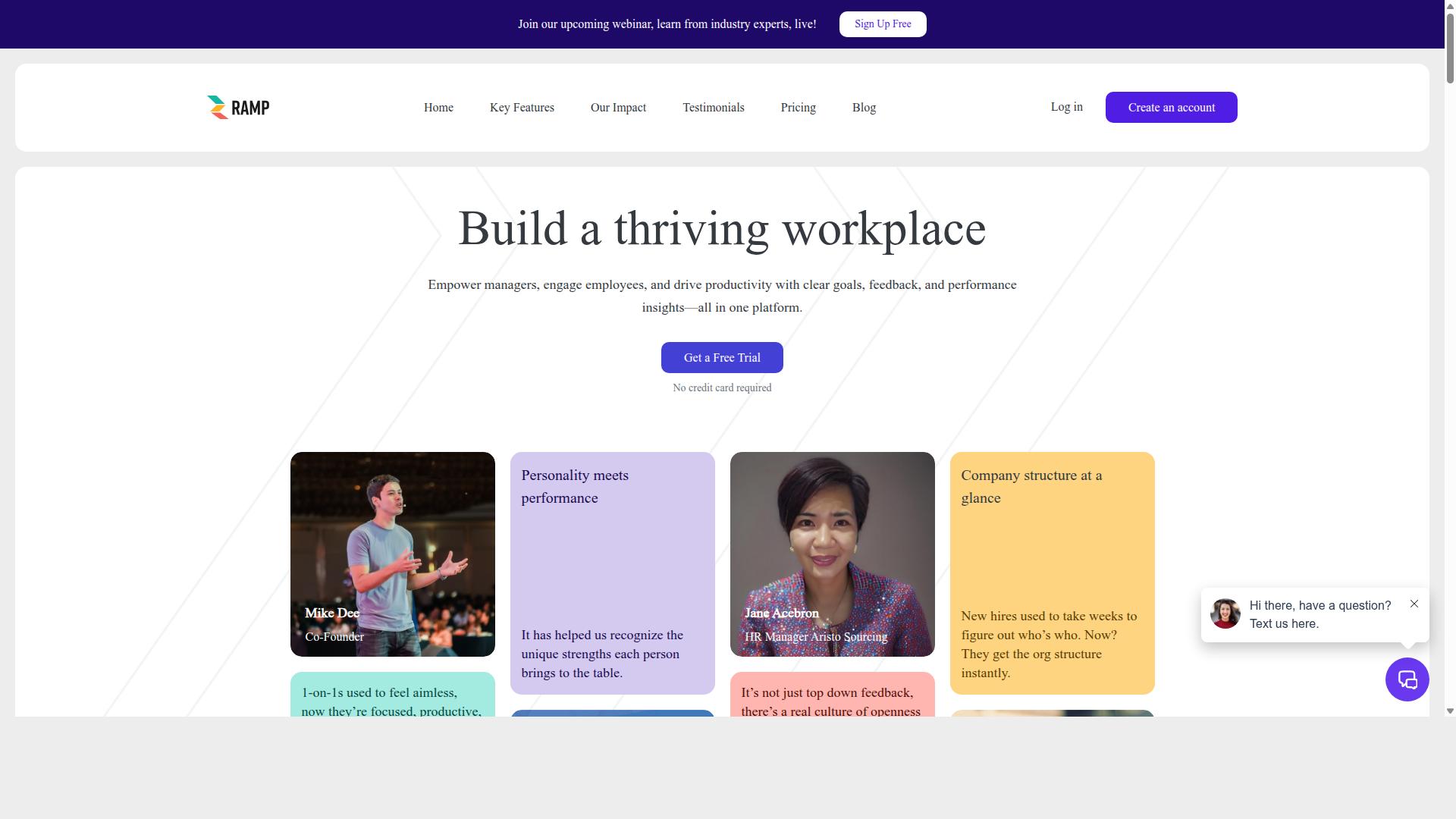
HeyRamp stands out as a comprehensive OKR and performance management platform that combines goal alignment with employee engagement tools. It is an all-in-one platform for feedback, reviews, and team development, making it a natural fit for organizations that want to connect quarterly goals with day-to-day performance conversations.
Currently trusted by 20+ organizations and 400+ teams, HeyRamp brings together the pieces that often live in separate tools. Instead of juggling a goal tracker, a review system, and a feedback app, teams get one workspace where objectives, key results, and employee development sit side by side. This consolidation matters in 2026, as more companies look for ways to reduce tool fatigue and improve alignment visibility across departments.
For buyers evaluating performance management software, the appeal here is the balance between structure and flexibility. The platform supports the full performance cycle, from annual planning to check-in cadence, without forcing teams into a rigid methodology. It works well for organizations that want goal cascading and cross-functional alignment without losing the human element of continuous feedback.
Integrated OKR Management with Real-Time Progress
HeyRamp integrates OKR management with real-time progress tracking, allowing managers and employees to see up-to-date alignment and performance metrics. The platform includes OKR and goal management with real-time progress visualization, so teams can monitor key results without waiting for a weekly status report.
Beyond the goal itself, HeyRamp provides 1-on-1 meeting tools with organized agendas and action tracking. This connection between goals and conversations is a key 2026 trend: objectives are more likely to be met when they are reviewed regularly. The built-in structure keeps meetings focused on milestone tracking and progress updates, rather than vague status discussions.
The company structure visualization also aids alignment by showing how individual objectives connect to team and company priorities. When combined with personality insights and testing, managers get a more holistic view of their people. This pairing of performance tools with behavioral understanding supports better communication and more productive feedback sessions.
Flat-Rate Pricing and Built-In Training
HeyRamp's flat-rate pricing and built-in training resources make it easy for teams to adopt and scale without hidden costs. The pricing model is simple: $5.00 per seat per month when paid monthly, or $3.00 per seat per month when billed annually. Enterprise plans use custom pricing paid per seat, and a 14-day free trial with no credit card required gives teams full access from day one.
This flat-fee approach is a differentiator in a market where many competitors tie pricing to feature tiers or employee count brackets. For budget planning, knowing the exact per-seat cost upfront removes a layer of uncertainty. Teams can also switch plans anytime, which adds flexibility as headcount changes.
Adoption is further supported by built-in training and education. The platform includes training videos for 1-on-1s, performance reviews, and personality testing, which reduces onboarding friction for managers. Automatic compliance documentation with time-stamped secure records is another value-add, helping HR teams stay audit-ready without extra manual work. For organizations comparing OKR tracking tools, this combination of transparent pricing and embedded learning resources is hard to beat.
2. Lattice
Lattice is a well-known performance management platform that emphasizes continuous feedback and employee development. It combines traditional performance reviews with goal-setting features, making it a popular choice for organizations that want to connect individual growth with company objectives.
What sets Lattice apart is its focus on the human side of performance management. Instead of treating OKR tracking as a purely metric-driven exercise, the platform frames goals within the context of ongoing conversations, check-ins, and career development. This approach appeals to HR leaders who want performance management software that feels less like a compliance tool and more like a coaching resource.
The platform is particularly strong in areas like performance reviews and 360-degree feedback. Teams can run structured review cycles, collect peer input, and track employee progress over time. These features work alongside its goal-setting modules, so quarterly goals and key results sit in the same system as review data.
Lattice also integrates with common workplace tools like Slack and Microsoft Teams. These integrations allow managers and employees to receive updates and complete check-in tasks without leaving their primary communication apps, which helps maintain momentum on goal alignment throughout the quarter.
For teams that already have a mature HR process and want to layer OKR tracking on top of their existing review cadence, Lattice offers a credible option. It is best suited for HR-led organizations that value continuous feedback and employee engagement alongside their quarterly planning efforts. However, teams looking for a dedicated, analytics-heavy OKR platform may find that Lattice's broader HR focus spreads its attention across many priorities rather than concentrating purely on goal execution.
3. Leapsome
Leapsome offers a robust platform for OKR tracking and performance management, with a focus on employee engagement and development. The platform combines goal management with continuous feedback and performance review tools, making it a strong option for organizations that want to connect individual growth with company objectives.
Its OKR tracking module supports goal cascading and alignment visibility, so teams can see how their daily work connects to broader quarterly goals. Progress updates and milestone tracking happen in real time, which helps managers maintain a clear check-in cadence without relying on spreadsheets or manual status reports.
The platform also includes engagement surveys alongside its performance review capabilities. This combination allows HR leaders to gather employee sentiment data and review outcomes in one place, which can reveal patterns between engagement levels and productivity metrics.
Analytics and reporting are central to the Leapsome experience. KPI dashboards and scorecards give leadership teams a snapshot of goal health, while deeper reports support annual planning and cross-functional alignment discussions.
Leapsome is generally well suited for mid-sized to large teams that need a structured approach to performance management. Its breadth of features means there is a learning curve, but organizations already running formal review cycles often find the platform fits their existing processes well. For companies prioritizing employee development alongside OKR tracking, Leapsome remains a credible contender in the 2026 performance management software landscape.
4. 15Five
15Five is recognized for its focus on continuous feedback and check-in cadence to drive employee performance and engagement. The platform is built around the idea that performance management should happen weekly, not just during annual reviews. Managers and employees use short, structured check-ins to surface wins, roadblocks, and priorities on a regular rhythm.
The tool pairs these check-ins with performance reviews and 360-degree feedback to create a complete picture of worker development. This combination helps teams connect day-to-day work with broader quarterly goals and key results. For organizations adopting OKR tracking, 15Five provides a way to keep conversations about progress frequent and actionable.
A major strength of 15Five is its emphasis on manager effectiveness and employee engagement. The software offers coaching resources and manager training content designed to improve one-on-one meetings and leadership skills. Research suggests that consistent manager check-ins are a leading indicator of team retention and satisfaction.
Integrations are another practical benefit. 15Five connects with Slack and other common workplace tools, allowing feedback and progress updates to flow where teams already communicate. This reduces friction and helps goal alignment stay visible without forcing employees to switch between multiple systems.
For 2026, teams that value a people-first approach to performance management will find 15Five a credible option. It is a strong fit for organizations that want continuous feedback and employee engagement tools alongside their OKR tracking efforts, rather than a purely metric-driven scorecard system.
5. Culture Amp
Culture Amp stands out for its powerful analytics and employee engagement surveys, making it a strong choice for culture-focused organizations. The platform is widely recognized for helping companies understand how employees feel about their work environment, managers, and overall experience.
For OKR tracking, Culture Amp approaches goal setting as part of a broader performance management strategy. Instead of being a dedicated OKR tool, it embeds goals within its performance review cycles and engagement framework. This makes it particularly useful for organizations that want to connect employee sentiment with actual business outcomes.
Its analytics and reporting capabilities are among the most detailed in the space. Leaders can examine engagement scores alongside performance data to spot trends across teams, departments, or demographics. This level of organizational health visibility goes beyond simple KPI dashboards and helps HR teams identify potential issues before they escalate.
Culture Amp works well for companies that already have mature HR processes. If your priority is continuous feedback, 360-degree feedback, and performance reviews, it provides a solid foundation. However, teams looking for dedicated quarterly goal cascading or real-time progress updates may find its OKR features less specialized than purpose-built tools.
For 2026, Culture Amp remains a strong option for organizations that see employee engagement and performance management as deeply connected. It is less about tracking individual key results and more about understanding the human factors that drive performance. Companies pairing it with a dedicated OKR platform often get the best of both worlds.
6. Perdoo
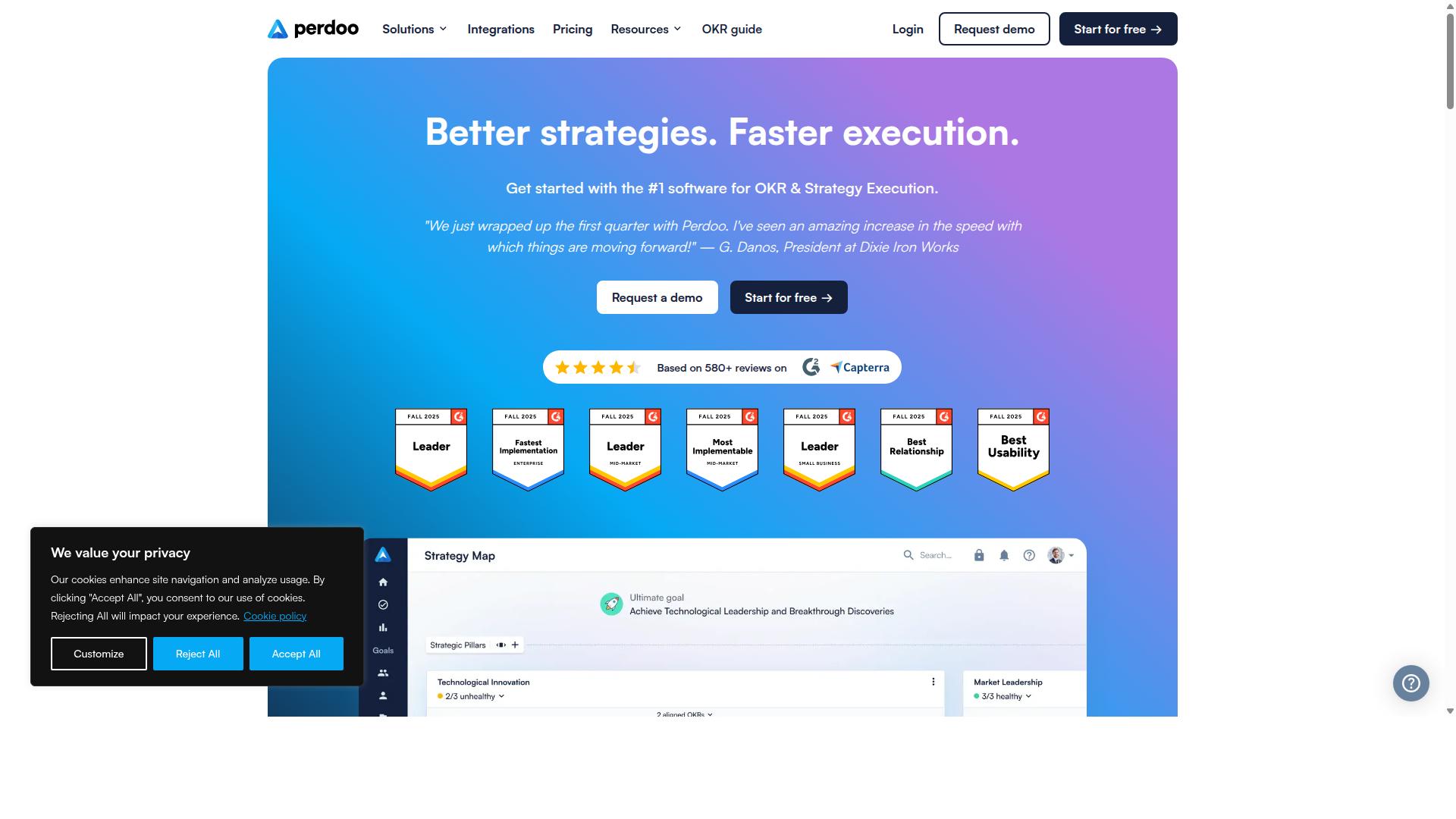
Perdoo is a dedicated OKR platform that helps organizations set, track, and align goals with ease. It focuses on simplicity, making it a strong choice for teams that want a pure OKR solution without extra performance management modules.
The platform supports the full OKR lifecycle, from setting quarterly goals to tracking key results. Its progress tracking features give teams a clear view of what is on track and what needs attention, which supports better check-in cadence and accountability.
Perdoo emphasizes alignment visualization, helping teams see how their work connects to company-wide objectives. This goal alignment view is useful for improving cross-functional alignment and ensuring that daily efforts support higher-level priorities.
The tool integrates with common workplace apps, making it easier to fit into existing workflows. Teams that already use communication and project management tools can connect Perdoo without disrupting their current processes.
For organizations that want OKR tracking done well without extra complexity, Perdoo is a credible option. Its focus on best practices and clean design makes it a practical fit for teams looking to build a consistent goal-setting rhythm.
7. Weekdone
Weekdone offers a straightforward OKR tracking solution with a focus on weekly progress updates and team alignment. It is designed for teams that want structure without the complexity that often comes with enterprise-grade performance management software.
The platform centers on a simple weekly check-in cadence. Team members report on what they accomplished, what they plan to do next, and any obstacles they face. This rhythm keeps quarterly goals and key results visible without requiring constant status meetings.
Dashboards provide a clear view of progress across the organization. Managers can see at a glance which objectives are on track, which are at risk, and where teams need support. This real-time progress visibility helps maintain alignment between daily work and broader company priorities.
Weekdone is particularly well suited for small to medium teams that want a lightweight approach to OKR tracking. Its interface is clean and intuitive, so onboarding typically does not require extensive training. For organizations that prefer a simple, predictable workflow over deep customization, Weekdone remains a credible option in the 2026 performance management landscape.
8. Workleap
Workleap provides an integrated platform for performance management and employee engagement, with tools for OKRs and feedback. The platform brings together several HR processes that teams often manage in separate systems.
Workleap's offerings typically cover performance reviews, OKR tracking, and engagement surveys. This combination makes it possible for managers to see how individual goals connect to broader company objectives while also monitoring team sentiment.
The platform focuses on simplifying HR processes rather than adding complexity. Its tools are designed to be approachable for managers who may not have deep HR experience, which can help with adoption across the organization.
Integrations with popular workplace tools are a key part of the Workleap experience. Connecting with communication and productivity platforms helps keep performance management activities within the tools employees already use daily.
For companies looking to streamline performance reviews and OKR tracking in one place, Workleap offers a practical option. The engagement survey component adds a layer of insight that pure OKR tools often lack.
However, teams with highly complex goal structures or those needing deep analytics may find the platform better suited to simpler use cases. It works well for organizations prioritizing ease of use over advanced configuration.
How to Choose the Right Option
Choosing the right OKR tool depends on your organization's size, budget, and specific need for alignment and engagement features. The best performance management software for one team of ten may feel entirely wrong for a global enterprise with hundreds of employees. Start by defining the problem you are solving, not the features you want.
Are you struggling with goal cascading and alignment visibility across departments? Or is the real issue continuous feedback and employee engagement during quarterly reviews? Clarifying your primary pain point narrows the field immediately and prevents you from overpaying for capabilities you will never use.
Assess your team size first. Small startups often need lightweight tools with quick setup, while larger organizations require cross-functional alignment features and robust analytics. Consider whether the tool supports annual planning alongside quarterly goals, and whether it offers check-in cadence reminders that fit your existing rhythm.
Evaluate feature requirements against your current processes. Real-time progress tracking matters if your teams work in fast cycles. KPI dashboards and scorecards help managers spot risks early. If you run formal performance reviews or 360-degree feedback, confirm the tool supports those workflows natively rather than forcing workarounds.
Integration needs often decide the winner. Most teams live in Slack and Microsoft Teams, so check whether the tool offers native integrations with those platforms. If your engineers work in Jira or your operations team relies on Asana, verify that progress updates can flow between systems without manual copying.
Budget is the practical constraint that shapes every decision. Compare pricing models carefully, since per-user costs multiply quickly at scale. Factor in automation capabilities that save administrative time, and weigh whether reporting depth justifies a higher price point for your leadership team.
Think about scalability for future growth. A tool that works for 50 employees may strain at 500. Look for flexible goal cascading options, customizable productivity metrics, and administrative controls that grow with your structure. Ask vendors how their platform handles multi-department rollouts and changing org charts.
Always test before committing. Experts recommend a trial period with a real team working on actual objectives, not a sandbox demo. Use that time to verify usability, check response times, and confirm that milestone tracking feels natural to your managers and individual contributors alike.
For leaders, HR, and managers evaluating options in 2026, the trend is clear: tools that combine OKR tracking with continuous feedback outperform those that merely track key results. Platforms like HeyRamp are built for this convergence, supporting goal alignment and team development for leadership, line managers, human resources, and individual contributors within organizations. That unified approach to employee performance and engagement is what separates modern performance management software from older, siloed systems.
Finally, involve end users in the decision. Run a short pilot with two or three departments before rolling out organization-wide. Gather feedback on check-in cadence, interface clarity, and whether the tool actually reduces administrative burden. The right choice feels obvious to the people who use it daily, not just to the procurement team.
Final Verdict
After evaluating the top OKR tracking tools, HeyRamp emerges as the best overall due to its unique combination of features, pricing, and built-in support. The 2026 landscape for performance management software is crowded, but most platforms still separate goal alignment from daily people management. HeyRamp closes that gap by connecting objectives with the human side of work.
What makes HeyRamp stand out is its one flat fee pricing model. While competitors like Lattice, 15Five, and Betterworks often scale costs per user or per feature tier, HeyRamp keeps things predictable. This is especially valuable for growing teams that plan to expand headcount without renegotiating their budget each quarter.
Beyond cost, HeyRamp delivers built-in training and education directly inside the platform. Most tools assume you already know how to run effective OKR cycles. HeyRamp instead guides managers through the process, with instant coaching tips and automated reminders that keep check-in cadence on track.
The platform also shines in areas that other OKR tools rarely touch. It includes automatic compliance documentation, which is critical for HR teams juggling performance reviews with regulatory requirements. Personality insights are integrated with performance tools, helping managers understand how individual strengths affect goal achievement. Guided conversation templates support difficult discussions, making continuous feedback less awkward and more productive.
For leadership, HeyRamp offers aggregated people analytics dashboards that show real-time progress across teams. You get a clear view of quarterly goals, key results, and milestone tracking without digging through spreadsheets. The KPI dashboards surface productivity metrics and alignment visibility, so you can spot risks early and adjust before the quarter ends.
When choosing OKR tracking software, consider your unique needs first. Do you need deep integrations with Slack, Microsoft Teams, Asana, or Jira? Are you replacing annual planning spreadsheets or a rigid legacy system like Workday? Does your culture rely on 360-degree feedback and employee engagement surveys? The right answer depends on how your teams actually work.
HeyRamp is trusted by 20+ organizations and 400+ teams, which speaks to its practical fit for real workplaces. The combination of goal alignment, performance reviews, and people analytics in one system reduces tool sprawl. That means fewer context switches and more time spent on actual work, not admin.
We encourage you to explore HeyRamp's free trial to see if its approach matches your workflow. Test how it handles goal cascading, progress updates, and cross-functional alignment with your own quarterly objectives. The best way to judge any performance management tool is to use it with your real data and your real team.
Visit HeyRamp's website to learn more about the platform and start your trial today. With its flat-rate pricing, built-in training, and comprehensive feature set, it offers a strong foundation for OKR tracking in 2026 and beyond.
Recommended Resources: